
How to Tell If a Child Is Ready to Read
A Parent’s Guide to Recognizing the Signs
Every parent looks forward to the moment their child begins reading. But one of the biggest questions families ask is:
“How do I know if my child is actually ready to read?”
The truth is — reading readiness isn’t about rushing. It’s about recognizing developmental signs that show your child’s brain is prepared to connect sounds, letters, and meaning.
Some children are ready at four. Others closer to six. And that’s completely normal.
Here’s what you should look for:
What “Reading Readiness” Really Means
Reading readiness is not about memorizing words.
It’s about foundational skills like:
Listening and comprehension
Sound recognition
Letter awareness
Focus and memory
Curiosity about print
When these pieces are in place, reading becomes much easier and far less frustrating.
At The Right Choice Academy, we focus on building these foundations first — because strong readers are built, not rushed.
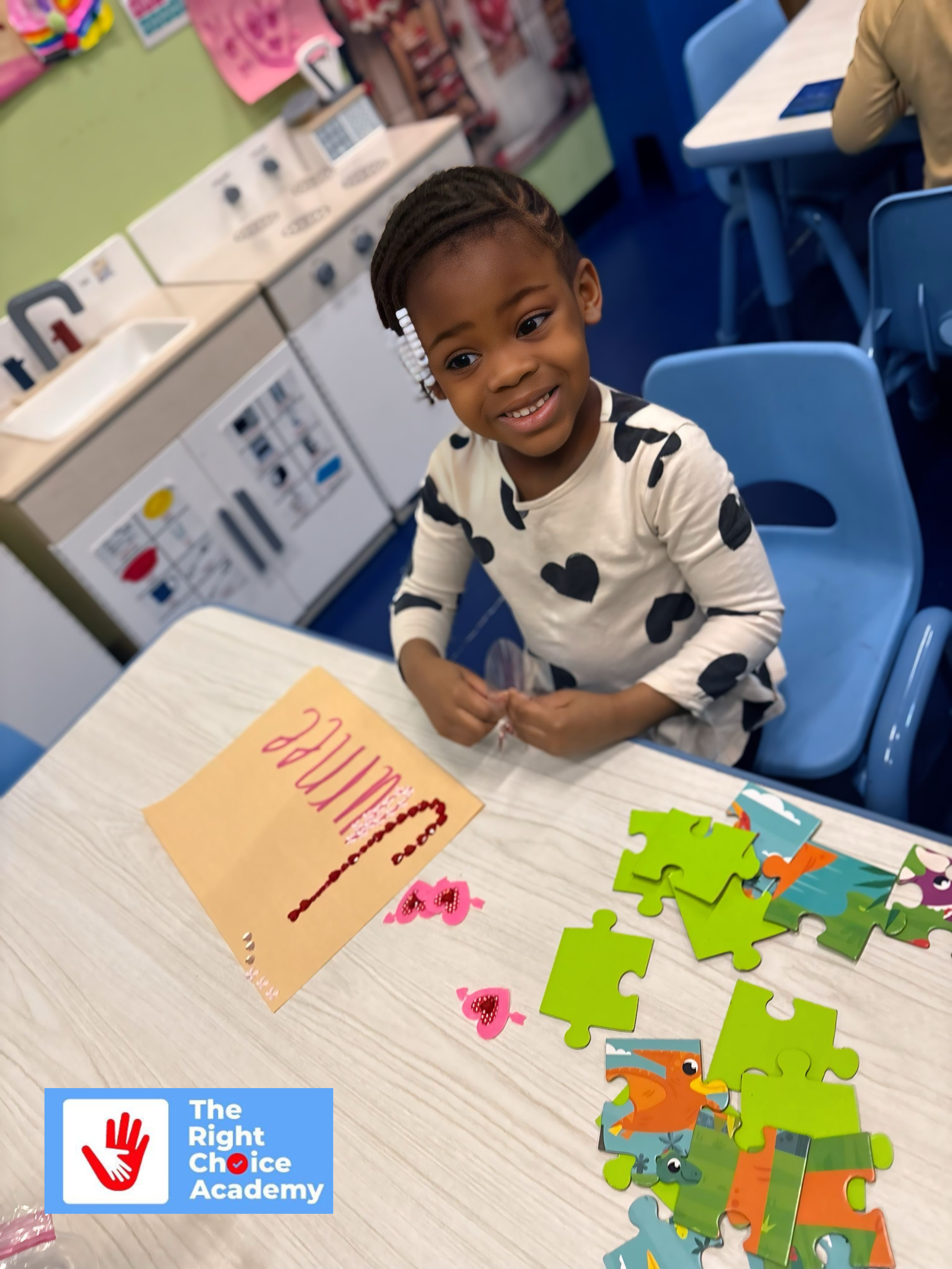
A scholar at The Right Choice Academy outlining her name during this hands-on learning assignment.
7 Signs Your Child May Be Ready to Read
1. They Love Being Read To
If your child:
Brings you books
Asks for the same story repeatedly
Talks about characters
Predicts what happens next
That’s a strong indicator of comprehension development. Interest is often the first sign of readiness.
2. They Understand That Print Has Meaning
Watch for children who:
Recognize store signs or logos
Know that words on a page tell a story
Follow text with their finger
They’re beginning to understand how reading works.
3. They Recognize Letters (Especially in Their Name)
Most children ready to read can:
Identify at least several letters
Recognize their own name in print
Match letters to sounds
Letter-sound awareness is a major milestone.
4. They Can Hear and Play with Sounds
Phonemic awareness is critical.
If your child can:
Recognize rhymes (cat/hat)
Identify beginning sounds
Clap syllables
Their brain is developing the sound-processing skills needed for decoding words.
5. They Try to “Write” Words
Even scribbles count.
Children ready to read often:
Attempt to write their name
Sound out simple words
Ask how to spell things
Writing and reading develop together.
6. They Can Focus for Short Periods
Reading requires attention.
If your child can:
Sit through a short story
Follow multi-step directions
Complete simple tasks independently
They’re building the focus needed for early reading success.
7. They Show Confidence, Not Frustration
This is important.
Children who are ready to read show curiosity — not overwhelm. If letter activities cause stress or tears, they may simply need more time and playful exposure.
And that’s okay.
Signs Your Child May Need More Time
Every child develops differently. You may notice:
Difficulty recognizing letters
Trouble hearing differences in sounds
Little interest in books
Short attention span
These are not failure signs. They simply mean your child may benefit from more foundational skill-building.
How Parents Can Support Reading Readiness at Home
You don’t need flashcards or pressure.
Instead:
Read daily (even 10 minutes matters)
Ask open-ended questions during storytime
Sing rhyming songs
Point out letters naturally during the day
Make reading fun — never forced
The goal is to build confidence and curiosity.
How The Right Choice Academy Builds Strong Readers
At The Right Choice Academy, we understand that reading readiness starts long before formal instruction.
Our early learning programs focus on:
Phonemic awareness through music and movement
Letter recognition through hands-on activities
Small group literacy support
Story-based comprehension development
Encouraging confidence before correction
We meet children where they are developmentally — building skills at the right pace.
Because when children feel capable, they thrive.
Final Thoughts
If you’re wondering whether your child is ready to read, you’re already being an attentive parent.
Look for:
Curiosity
Sound awareness
Letter recognition
Confidence
And remember — reading is a journey, not a race.
If you’d like to see how we nurture early literacy in a structured, supportive environment, we invite you to tour The Right Choice Academy and experience the difference firsthand.
Because when it comes to your child’s foundation, the right choice matters.