
Why Play in Pre K ?
The Science Behind Why Play Is Serious Learning
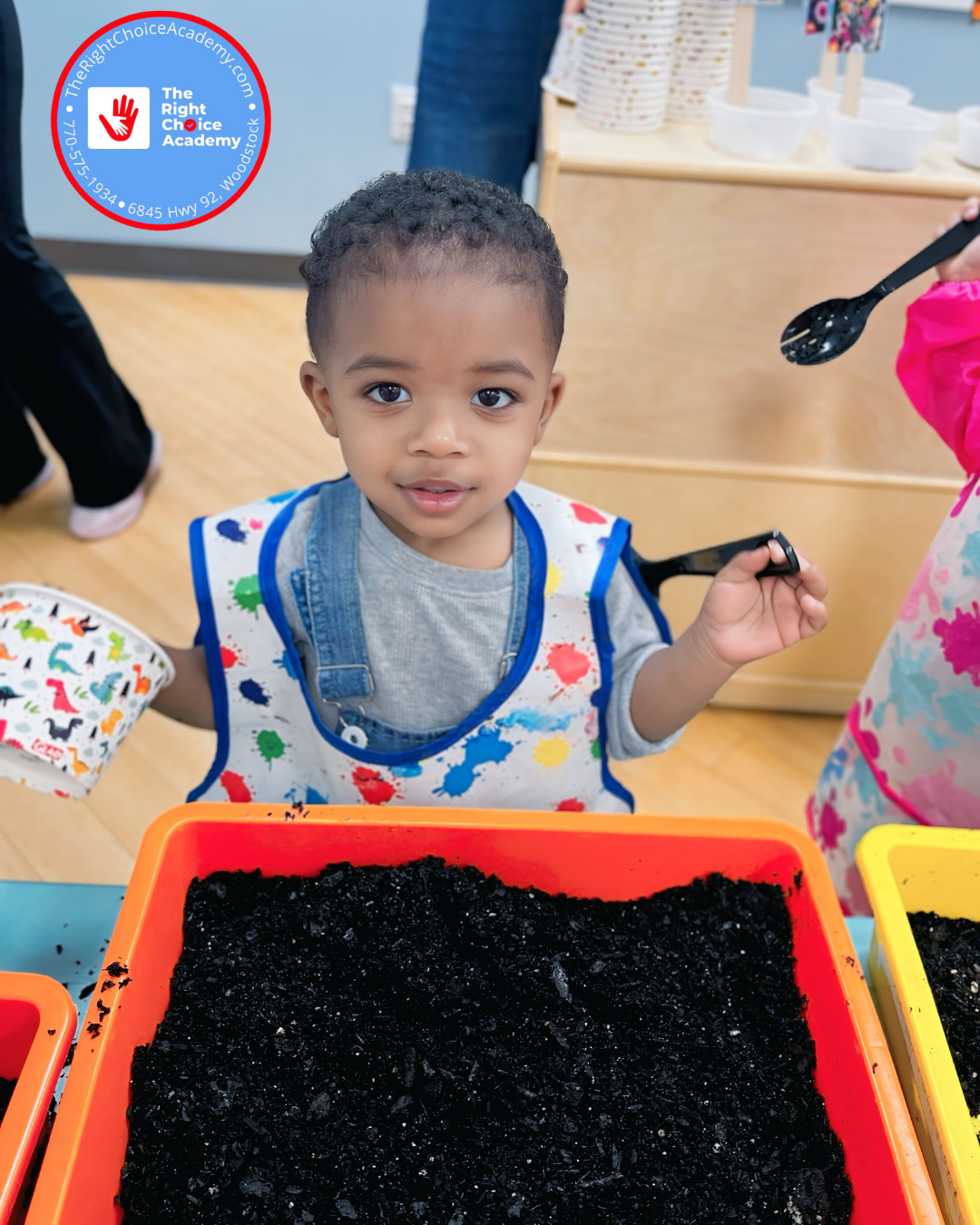
A happy scholar smiling during our Early Horticulture class for National Plant a Flower Day, pictured at The Right Choice Academy.
When parents walk into a preschool classroom, they often see blocks, dress-up clothes, paint stations, and children laughing together.
It can look like “just play.”
But here’s the truth:
Play is how young children learn best.
In preschool, play isn’t a break from learning — it is the learning.
If you’ve ever wondered whether play-based learning is enough to prepare your child for kindergarten and beyond, here’s what you need to know.
Play Builds Brain Development
During the preschool years, a child’s brain is developing faster than at almost any other time in life.
Through play, children:
● Build problem-solving skills
● Develop memory and attention
● Strengthen language pathways
● Practice decision-making
● Learn cause and effect
When a child builds a tower and it falls, they’re not just stacking blocks — they’re experimenting, analyzing, adjusting, and trying again.
That’s early STEM learning in action.
Play Strengthens Language and Communication
Dramatic play (pretend kitchens, doctor sets, grocery stores) helps children:
● Expand vocabulary
● Practice conversation skills
● Learn to express emotions
● Understand social cues
When children role-play, they rehearse real-world interactions in a safe space.
These early communication skills directly impact reading readiness and classroom confidence later on.
Play Teaches Social and Emotional Skills
Preschool isn’t just academic preparation — it’s social preparation.
Through play, children learn to:
● Share and take turns
● Resolve conflicts
● Manage frustration
● Develop empathy
● Work collaboratively
These are life skills.
In fact, many kindergarten teachers say emotional regulation is one of the strongest predictors of school success — and play builds it naturally.
Play Encourages Creativity and Confidence
When children engage in open-ended play:
● There is no single “right” answer
● They learn to trust their ideas
● They experiment without fear of failure
Creative confidence developed in preschool often carries into writing, problem-solving, and leadership later in life.
Play Supports Academic Readiness
Many parents worry: “Will my child be ready for kindergarten if they mostly play?”
Here’s what research consistently shows:
Play-based environments improve:
● Early literacy skills
● Math understanding
● Attention span
● Executive functioning
● Self-control
For example:
● Counting blocks builds math concepts
● Singing songs builds phonemic awareness
● Sorting toys builds early logic skills
● Story reenactment builds comprehension
Structured play lays the academic foundation without pressure.
What Healthy Preschool Play Looks Like
Not all play is the same.
● High-quality preschool programs balance:
● Guided play with teacher support
● Independent exploration
● Outdoor physical play
● Structured group activities
● Intentional learning centers
The key is purposeful play — not chaos.
How The Right Choice Academy Uses Play With Purpose
At The Right Choice Academy, play is thoughtfully designed to support whole-child development.
Our preschool classrooms incorporate:
● Literacy-rich dramatic play centers
● Hands-on math and science exploration
● Music and movement for brain development
● Outdoor learning experiences
● Small group instruction woven into play
We don’t choose between fun and fundamentals.
We combine both.
Because children learn best when they feel engaged, safe, and excited.
Final Thoughts: Play Is Preparation
Play is not wasted time.
It builds:
● Confidence
● Curiosity
● Communication
● Problem-solving
● Emotional strength
And those are the exact qualities children need to succeed in kindergarten — and far beyond.
If you’re searching for a preschool that understands the power of purposeful play, we invite you to visit The Right Choice Academy and see our classrooms in action.
Because when learning feels joyful, children thrive.